Hitori
Rules
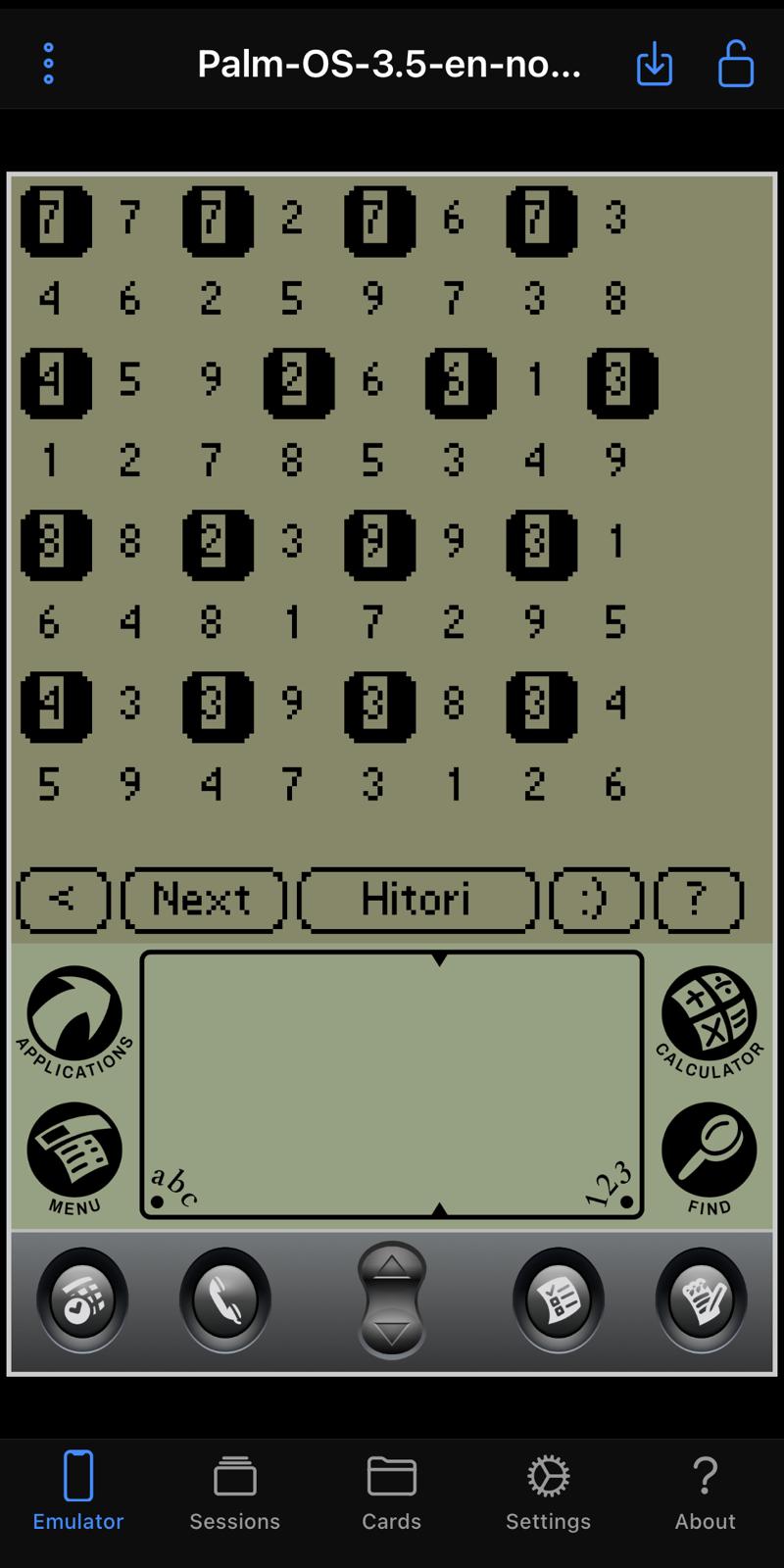
Hitori is played with a grid of squares or cells, with each cell initially containing a number. The game is played by eliminating squares/numbers and this is done by blacking them out. The objective is to transform the grid to a state wherein all three following rules are true:
- no row or column can have more than one occurrence of any given number
- black cells cannot be horizontally or vertically adjacent, although they can be diagonal to one another.
- the remaining numbered cells must be all connected to each other, horizontally or vertically.
Nurikabe
Rules
The puzzle is played on a typically rectangular grid of cells, some of which contain numbers. Cells are initially of unknown color, but can only be black or white. Two same-color cells are considered "connected" if they are adjacent vertically or horizontally (touching diagonally doesn't count). Connected white cells form "islands", while connected black cells form the "sea".
The challenge is to paint each cell black or white, subject to the following rules:
- Each numbered cell is an island cell, the number in it is the number of cells in that island.
- Each island must contain exactly one numbered cell.
- There must be only one sea, which is not allowed to contain "pools", i.e. 2×2 areas of black cells.
Human solvers typically dot the non-numbered cells they've determined to be certain to belong to an island.
Like most other pure-logic puzzles, a unique solution is expected, and a grid containing random numbers is highly unlikely to provide a uniquely solvable Nurikabe puzzle.
Solution Methods
See
Wiki
Good luck!